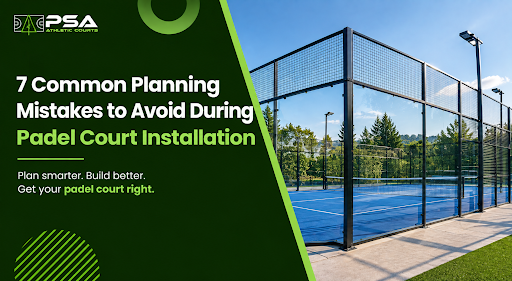
Introduction
A successful padel court installation starts long before construction equipment arrives on site. Careful planning helps ensure the court has the right dimensions, surface, drainage, lighting, and surrounding space for safe and enjoyable play. Overlooking important details during the planning stage can lead to delays, maintenance issues, or costly modifications later.
Whether you are developing a private facility, sports club, school, or commercial recreation space, understanding common planning mistakes can help you prepare for a smoother padel court construction project.
1. Choosing the Site Without Evaluating Ground Conditions
One of the most important steps in padel court installation is selecting and evaluating the site. A location may appear suitable but still have drainage, soil, grading, or accessibility concerns.
Before construction begins, evaluate:
- Existing ground conditions and soil stability
- Site grading and water runoff
- Accessibility for construction equipment
- Available space around the court
- Existing utilities and nearby structures
Proper site preparation provides a stable foundation for the rest of the project.
2. Overlooking Drainage Requirements
Poor drainage can affect the court surface and surrounding areas, particularly after heavy rainfall. Water that remains around the court can contribute to surface deterioration and create maintenance challenges.
A drainage plan should be considered early in the padel court construction process. Proper grading, drainage channels, and runoff management can help direct water away from the playing area and protect the court foundation.
3. Treating Padel Court Design as an Afterthought
A padel court designer considers more than just the court enclosure. The design should account for playing dimensions, access points, fencing, glass panels, lighting, and the surrounding environment to create a functional and well-planned court.
During the design stage, consider:
- Court orientation
- Player access and circulation
- Glass and fencing configuration
- Lighting placement
- Safety clearances
- Spectator and seating areas
A well planned design can improve both functionality and the overall experience of the facility.
4. Failing to Plan for Proper Lighting
Lighting is particularly important for courts that will be used during evenings or in facilities with extended operating hours. Poorly positioned fixtures can create glare, shadows, or uneven illumination.
Lighting should be incorporated into the padel court design rather than added after construction. Consider fixture positioning, mounting locations, electrical requirements, and how lighting will affect players from different areas of the court.
5. Ignoring Access and Construction Logistics
Another common mistake is focusing only on the finished court while overlooking how materials and equipment will reach the site. Restricted access can complicate the installation process and affect project timelines.
Before padel court installation begins, review:
- Delivery routes
- Equipment access
- Material storage areas
- Worksite safety
- Existing landscaping or structures
Planning these logistics in advance can help reduce unnecessary disruptions during construction.
6. Selecting Materials Without Considering Long Term Use
The materials used for the court should match the expected level of play, climate, maintenance requirements, and facility usage. Choosing components based only on appearance or initial specifications may create challenges later.
Discuss the expected usage, environmental conditions, maintenance needs, and performance requirements with your court construction professional before selecting surfaces, glass, fencing, and other components.
7. Not Planning for Maintenance From the Start
Maintenance should be part of the planning process, not something considered after the court is completed. Regular inspections and upkeep can help preserve playing conditions and extend the useful life of the facility.
Create a maintenance plan that addresses:
- Court surface inspections
- Glass and fencing checks
- Drainage maintenance
- Lighting inspections
- Cleaning requirements
Planning for ongoing maintenance makes it easier to keep the facility safe and playable over time.
Key Takeaways
Successful padel court installation depends on detailed planning before construction begins. Site conditions, drainage, padel court design, lighting, construction access, materials, and future maintenance should all be considered during the planning stage.
By addressing these seven common mistakes early, property owners and facility managers can create a more organized padel court construction process and build a court designed for reliable long term use.